
OSHA finalizes rule on proper fit requirements for personal protective equipment in construction
…shouldn’t we be paying attention in the maritime industry?
Announced on December 11th, 29 CFR 1926.95(c) is being changed to require personal protective equipment for construction must fit properly. Specifically, “PPE must fit properly to provide adequate protection to employees. If PPE doesnot fit properly, it can make the difference between an employee being safely protected, having inadequate protection, or being dangerously exposed. In some cases, ill-fitting PPE may not protect an employee at all, and in other cases it may present additional hazards to that employee and to employees who work around them.
For example, sleeves of protective clothing that are too long or gloves that do not fit properly may make it difficult to use tools or operate equipment, putting the wearer and other workers at risk of exposure to hazards, or may get caught in machinery, resulting in injuries to the wearer such as fractures or amputations. The legs of protective garments that are too long could cause tripping hazards for the worker with the improperly fitting PPE and could also impact others working near that worker. Protective clothing that is too small may increase a worker’s exposure to hazards by, for example, providing insufficient coverage from dangerous machinery or hazardous substances.
The issue of improperly fitting PPE is particularly important for smaller construction workers, including some women, who may not be able to use currently existing standard size PPE. Fit problems can also affect larger workers, and standard-size PPE does not always accommodate varying body shapes.”
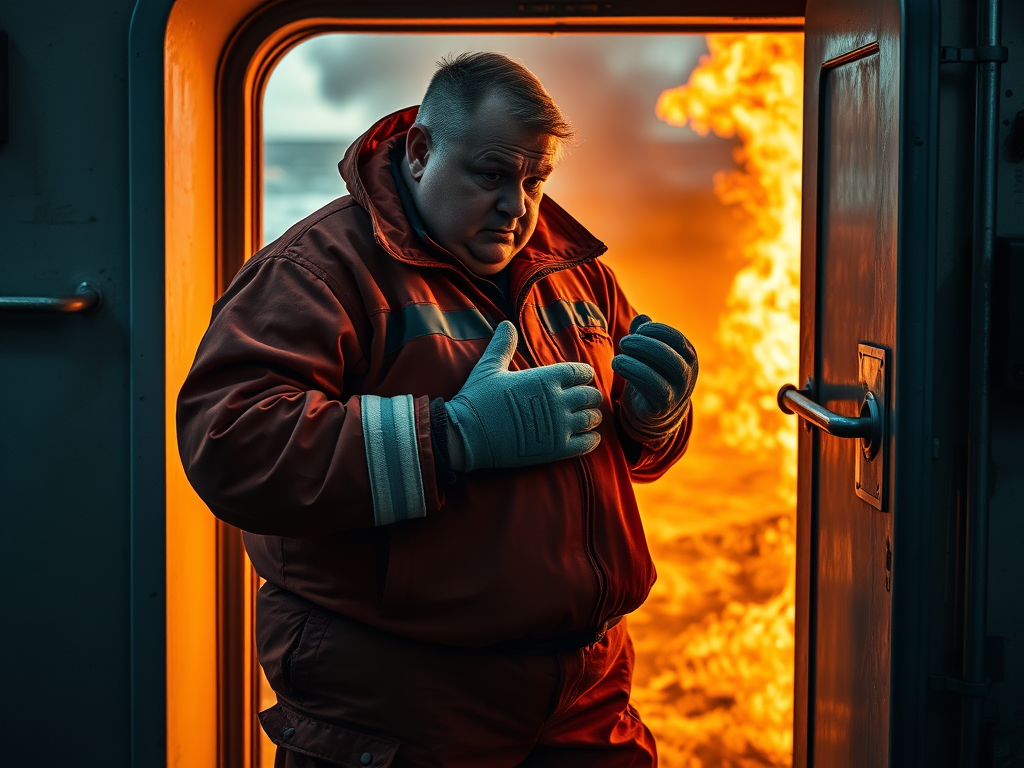
All too many in the maritime industry can relate, as it is not simply different genders requiring adjustments to standard-size PPE, but many factors come into play. One factor is frequently cost for specialized PPE, such as firefighter ensembles. Too often, a vessel is equipped with “standard-size” firefighter outfits, causing issues when the seafarers filling the billet aren’t “standard-size.” The high cost of this PPE frequently leads to seafarers preparing to enter shipboard fires or conduct drills in ill-fitting ensembles, with all the associated elevated risks.
It is incumbent on shipping companies to provide proper fitting personal protective equipment – whether it be gloves, coveralls, firefighter ensembles or other – for their crews. Unfortunately, the cost factor does come into play with vessels informed that certain types, sizes or genders of PPE are not available due to cost. Other industries, such as construction are adapting due to regulation, but should it require additional regulation to protect seafarers from improper PPE and its potential risks?
Additional Reading and Links