
Lessons from the X-Press Pearl Disaster: A Safety Blueprint
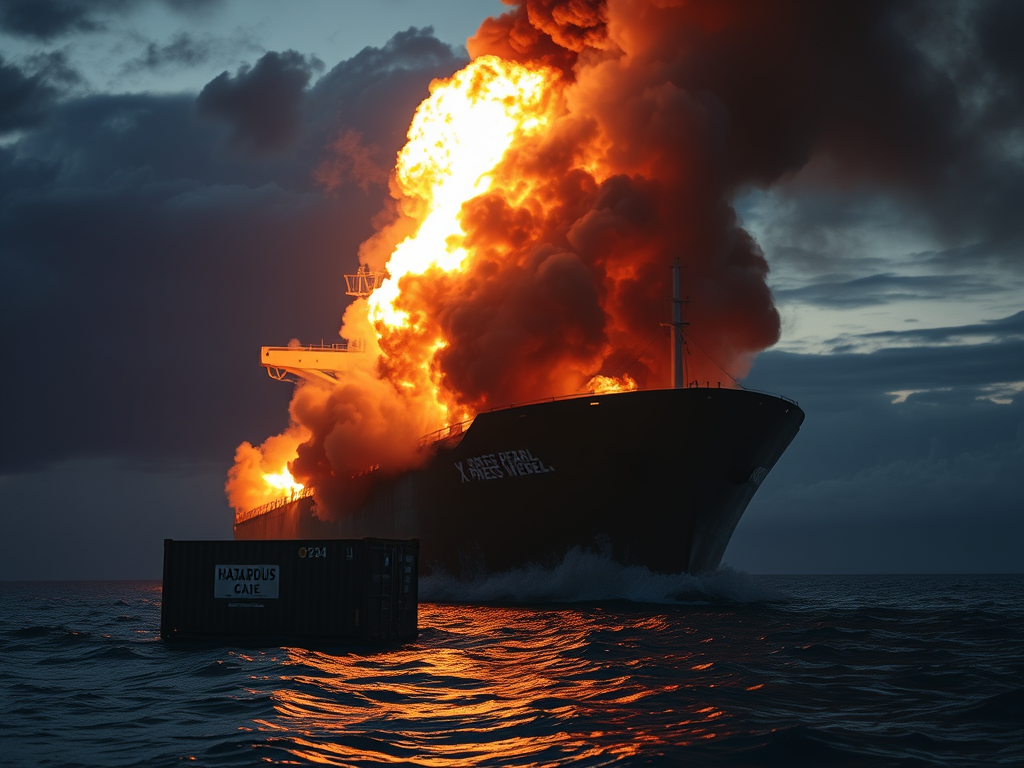
On May 20, 2021, the Singapore-flagged container vessel X-Press Pearl suffered a catastrophic fire while anchored off Colombo, Sri Lanka. The ship, laden with nearly 1,500 containers including those packed with dangerous goods (DG), was eventually declared a total loss. Central to this disaster was a leaking container carrying nitric acid (UN 2031, Class 8 with subsidiary risk Class 5.1) that had shown signs of corrosion and chemical reaction nearly two weeks before the fire. Despite attempts by the ship’s crew to seek support and request offloading of the hazardous cargo at multiple ports, bureaucratic hurdles and lack of readiness at shoreside facilities ultimately forced the vessel to continue its voyage with a deteriorating situation onboard.
This article examines the timeline and critical failures surrounding the X-Press Pearl incident, drawing from official investigations by the Transport Safety Investigation Bureau (TSIB) of Singapore and insights from Gard P&I. We also explore the need for immediate and decisive action by all stakeholders—flag states, port authorities, operators, shippers, and insurers—to prevent similar tragedies in the future.
1. A Timeline of Missed Opportunities
The leak in container FSCU7712264 was first observed during loading operations in Jebel Ali and subsequently identified onboard at Hamad Port, Qatar, on May 11, 2021. Despite visible damage, bubbling paint, and a strong chemical odor, the container was not offloaded due to insufficient emergency handling capabilities and holiday staffing issues. A similar rejection occurred in Hazira, India, where the terminal cited an inability to deal with leaking DG containers.
TSIB’s report underscores these lost opportunities. It highlights that requests for offloading were not pursued with adequate urgency, and alternative solutions such as specialized mobile hazmat teams were not mobilized. The vessel continued its voyage to Colombo, during which the leak persisted, spreading toxic fumes and causing corrosive damage to deck structures and potentially to other containers.
2. Delayed Response, Escalated Consequences
By the time X-Press Pearl reached Colombo, it was anchored offshore awaiting a berth. Despite notifying the authorities and escalating concerns over the worsening situation, the vessel was not granted immediate entry. When the fire broke out in cargo hold #2, all CO2 bottles were discharged in one go—an action that did not account for the hold’s actual loading condition and failed to suppress the blaze. The fire eventually engulfed the ship, leading to its abandonment and environmental contamination from spilled plastic pellets and chemicals.
Gard’s 2025 article “Hazardous Container Leaks: Swift Action is Key” explicitly draws on this incident, noting it as a textbook case where early intervention could have prevented catastrophe. Gard emphasizes that even when properly declared, DG cargo may still be poorly packed or stowed, and any leak should trigger immediate and coordinated action. Gard recommends that vessels should be empowered and supported to divert, even unilaterally, to the nearest safe location to mitigate risks.
3. Breakdown in Communication and Accountability
The TSIB investigation revealed a fragmented communication chain. The Master informed the operator, shipper, and agents; however, no single entity assumed full responsibility to push through the red tape. Port terminals cited lack of equipment and regulatory complications. Authorities deferred action due to jurisdictional uncertainties and incomplete risk assessments. The flag state, while informed, did not intervene decisively. The insurer and charterer delayed arranging alternatives.
This lack of accountability led to a slow, reactive posture rather than a proactive, unified emergency response. Both the TSIB and Gard stress the importance of a clearly designated lead responder who can coordinate between shipboard and shoreside stakeholders, with a mandate to act decisively in the face of escalating DG threats.
4. Lessons for the Future: Proactive Guidance and Policy Reform
Following the X-Press Pearl loss, the IMO adopted Resolution A.1184(33) in late 2023 to replace previous guidance on Places of Refuge (POR). These revisions clarify roles and responsibilities, encourage greater transparency in risk communication, and advise coastal states to develop contingency protocols and media management capabilities.
However, the tragedy also underscores that such guidance must be operationalized with training, drills, and readiness assessments. Ports must be equipped—either internally or via contractual relationships with third-party emergency response providers—to handle unexpected arrivals with chemical leaks. Clear indemnity frameworks and expedited decision-making processes must be established to reduce the risk of indecision.
5. The Human Factor: Empowering the Crew and Shoreside Partners
Despite commendable efforts by the X-Press Pearl crew, including continuous monitoring and containment of the leak, they were ultimately left without adequate shoreside support. The ship’s firefighting capabilities were not designed for a sustained DG fire exacerbated by oxidizing acid. Furthermore, the crew did not effectively utilize available SCBA and firefighting equipment during critical early stages.
This underscores the need for better integration of onboard and shore-based emergency response. Emergency drills should include DG leak scenarios with remote expert guidance. Shoreside responders must understand their responsibilities, not only from a legal but also from a risk-management perspective.
Conclusion: From Tragedy to Transformation
The X-Press Pearl disaster is a grim reminder of the cost of inaction. It highlights that maritime safety is not solely the responsibility of the crew but a collective duty shared by shoreside operators, port authorities, flag states, charterers, shippers, and insurers. Each of these stakeholders had an opportunity to act. Instead, bureaucratic inertia and siloed responsibilities turned a manageable DG leak into a multi-million-dollar catastrophe and an environmental crisis.
Both the TSIB investigation and Gard’s analysis provide a blueprint for improvement: clear communication, swift action, port readiness, regulatory clarity, and strong coordination. The IMO’s new POR guidance is a step in the right direction, but unless backed by investment, training, and resolve, the maritime community remains vulnerable.
The message is clear: When a dangerous goods container leaks, hesitation kills. Let X-Press Pearl be the last such warning lost at sea.
This incident also brings to light the critical shift in mindset required of the Master and other personnel when dealing with a leaking IMDG container. Transitioning from standard operating procedures to recognizing an emergent threat where immediate action is needed is not always intuitive or easy. It demands both training and instinct to override the natural inclination to manage within routine protocols. As humans, we often rely on past experiences to guide decisions, but in cases involving hazardous materials, hesitation or misjudging the severity can have devastating consequences. Recognizing this psychological hurdle is key to improving safety culture and ensuring future responses are swift and decisive.
Additional Reading and Links
TSIB – X-Press Pearl – Fire-IMDG Cargo – May 2021
Gard – Hazardous Container Leaks – swift action is key – March 2025
IMO Resolution A.1184(33) – Guidelines on Places of Refuge for Ships In Need Of Assistance