
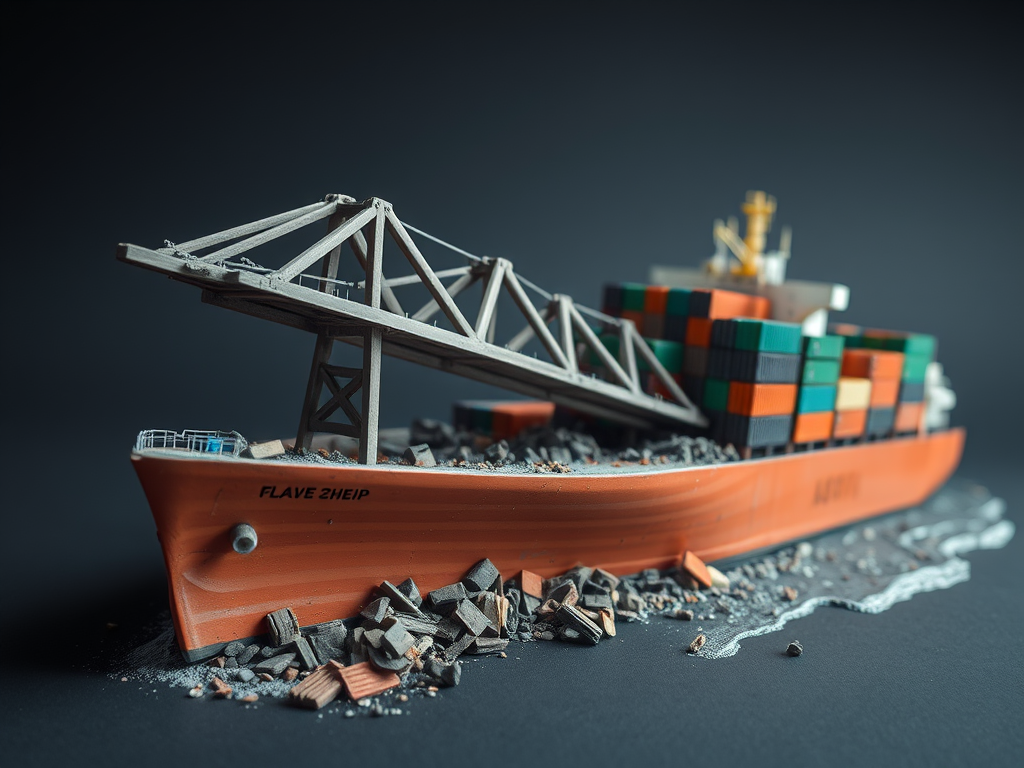
Dali Week: The Scapegoat Strategy: A Tainted Search for Accountability
The collapse of the Francis Scott Key Bridge was a horrific tragedy that tragically claimed six lives, severed a vital artery of U.S. infrastructure, and caused billions in economic damage. As detailed in our previous post, “Dali Week: The Catastrophic Costs of Systemic Failure and Unmitigated Risk”, the allision was the inevitable result of a decades-long pattern of systemic failures: a lack of modern pier protection, the cost-driven omission of tug escorts, and critical single points of failure in the vessel’s electrical and propulsion systems.
As the investigation shifts from technical fault to human culpability, maritime professionals face a terrifyingly familiar prospect: the criminalization of the mariner.
This approach—seeking to prosecute the individuals at the “pointy end” of a crisis—is a dangerous, lazy, and counterproductive strategy. It attempts to find a convenient human villain for failures that were, fundamentally, rooted in regulatory neglect, cost-cutting by policy-makers, and outdated corporate standards. Even where individual mariners exhibit negligence, their punishment often deflects attention from the systemic vulnerabilities that made the catastrophe possible.
The “Pointy End” Fallacy: Where Individual Action Meets Systemic Failure
The master, pilot and engineers of the Dali had mere minutes to react to a sudden, catastrophic loss of control. Their immediate, professional actions—dropping the anchor, issuing the “mayday” call, and alerting authorities—undoubtedly saved lives.
Yet, the macro-level problems they faced were insurmountable by individual skill:
- Inadequate Bridge Protection: The bridge piers were protected by an antiquated fender system designed for 1970s vessels. The crew cannot upgrade infrastructure.
- Missing Operational Redundancy: The omission of tethered tug escorts was an economic decision by shore-side authorities. An escort tug is the only proven operational redundancy capable of controlling a large vessel during a total power loss. The crew cannot mandate tug use.
- Vessel Design Flaws: The Dali’s total blackout demonstrated a profound single point of electrical failure in its design, a flaw permitted by classification societies and regulatory bodies. The crew cannot redesign the ship.
To hold the pilot or master criminally liable for consequences stemming from a systemic flaw—like an unmitigated infrastructure vulnerability—is to bypass the true responsibility of policy-makers and owners.
A Dangerous Global Trend: Persecution as Policy
The criminalization of maritime personnel is a rising global trend that sees governments, often under intense public and media pressure, immediately move to arrest and detain mariners following high-profile incidents. This reaction substitutes meaningful safety reform with political expediency.
Case Study 1: M/V Wakashio (Mauritius, 2020) – Negligence as a Systemic Smokescreen
In July 2020, the bulk carrier M/V Wakashio grounded on a coral reef off Mauritius, causing a devastating oil spill. The subsequent criminalization of the crew, while partly justified by individual actions, became a powerful distraction from profound corporate failures.
The Individual Failure and Criminalization:
The Mauritian investigation revealed that the vessel was dangerously close to shore—a deviation allegedly performed to pick up a Wi-Fi or cell phone signal. More critically, the Master was found to have consumed alcohol and was not acting in a professional manner despite recognizing the vessel was very close to the coast. This gross negligence undeniably contributed to the immediate cause of the grounding. The Indian Master and the Sri Lankan Chief Officer were swiftly arrested and detained for months, eventually pleading guilty to related charges and serving time.
The Systemic Reality:
While individual negligence was present, the scale of the disaster was the result of broader systemic issues:
- Corporate Pressure: The dangerous maneuver was reportedly driven by pressure or desire for connectivity—a failure of the industry to prioritize basic crew welfare and communication systems, leading mariners to take undue risks.
- Flag State/Classification Oversight: The overall maintenance and operational culture of the vessel, which permitted such behavior and proximity to danger, points to regulatory failures that precede the crew’s actions.
- Failed Regulatory Oversight: The vessel had reportedly deviated from its prescribed shipping lane, a failure that should have been monitored and questioned by shore-side Vessel Traffic Services (VTS) and/or the Mauritius Coast Guard.
- Shore-Side Response Failure: The tragic environmental damage was compounded by a slow and inadequate salvage and oil-spill response by the coastal state.
By arresting and jailing the crew, the narrative focused exclusively on the Master’s intoxication and decision-making, satisfying the public need for culprits while obscuring the corporate and regulatory failures that created the environment where a search for cheap Wi-Fi could turn into a national disaster.
Case Study 2: The M/V Xpress Pearl (Sri Lanka, 2021)
In May 2021, the container ship M/V Xpress Pearl caught fire off the coast of Sri Lanka, leading to the largest maritime chemical and plastic pellet spill in history.
The Criminalization:
The Sri Lankan Criminal Investigation Department (CID) immediately detained and charged the Russian Master with causing damage to the marine environment. The crew faced months of travel bans and legal uncertainty.
The Systemic Reality:
The Master and crew were managing a dangerous fire originating from a leaking nitric acid container for days. The actual root causes lay in the failure to manage hazardous materials (HazMat) properly across the supply chain:
- Cargo Stowage Failures: The highly reactive nitric acid was allegedly stowed improperly in outdated intermediate bulk containers (IBC). Another container from the same shipper, with teh same cargo had been flagged prior to loading for leaks and had been restuffed – missing the intended sailing on Xpress Pearl.
- International Negligence: The vessel had been denied assistance at multiple preceding ports (Qatar and India) because of the identified leak. The failure was a global one, spread across multiple port authorities who sought to offload a known danger.
- Inadequate Training/Equipment: The crew and the ship’s firefighting equipment were incapable of handling a runaway chemical reaction fire of that scale, a mismatch between operational risk and mandatory equipment standards.
The rapid arrest of the Master served as a political move, diverting public anger from the complex, multi-national failures of cargo declaration and port cooperation to the individual in command.
The Perverse Incentive: Punishment for Damage Control (Ocean Trader)
The threat of criminalization is not just reserved for environmental disasters; it can even target mariners who act competently, creating a perverse incentive that undermines safety.
Consider the case of the M/V Ocean Trader following the 2020 hazardous materials explosion in Port of Jebel Ali, UAE.
The Individual Action and Criminalization:
The explosion occurred onboard while the vessel was alongside the pier, caused by improperly stowed and declared hazardous cargo. Recognizing the immediate, severe danger posed by the explosion and resulting fire, the Master made the decisive, critical decision to order the evacuation of the vessel (including the mandatory standby fire crew). This professional action prevented any casualties among the crew and saved numerous lives. Despite his success in preventing human loss, the Master was later tried and convicted along with others from the port and shipping company for alleged negligence related to the incident.
The Systemic Reality:
The Master’s decision was a success story in loss prevention. The underlying failure was the breakdown of the cargo declaration and shore-side inspection process that allowed misdeclared HazMat to be loaded and explode. By prosecuting the Master who successfully averted human tragedy, the Ocean Trader case sends the chilling message that competence does not guarantee immunity. It punishes the very act of prioritizing life and creates a dangerous hesitation among captains who might delay evacuation or reporting for fear of being held accountable for the resulting (but now mitigated) physical damage.
Conclusion: Stop the Scapegoating, Start the Learning
The master, pilot and engineers of M/V Dali were the final actors in a tragic play written by policy failures, deferred maintenance, and cost-cutting decisions.
Criminalizing the Dali crew—or any mariner—is a political expedient that causes profound harm to global maritime safety. It replaces the rigorous, analytical approach of casualty investigation with a simplistic search for a human villain. This not only terrorizes competent professionals, exacerbating the critical industry-wide retention crisis, but it also discourages the crucial culture of transparent reporting and honest disclosure, which is the very foundation of safety improvement.
We must shift accountability away from the individual mariner and toward the institutional actors who control the parameters of safe operation: the classification societies that certify flawed designs, the port authorities that sacrifice safety for economy, and the governments that ignore warnings until catastrophe strikes. The Dali disaster must be a learning moment, not a persecution, to ensure that the systemic failures that caused the tragedy are addressed at their root.