Safety Observation: Tradeoffs Between Thoroughness and Efficiency
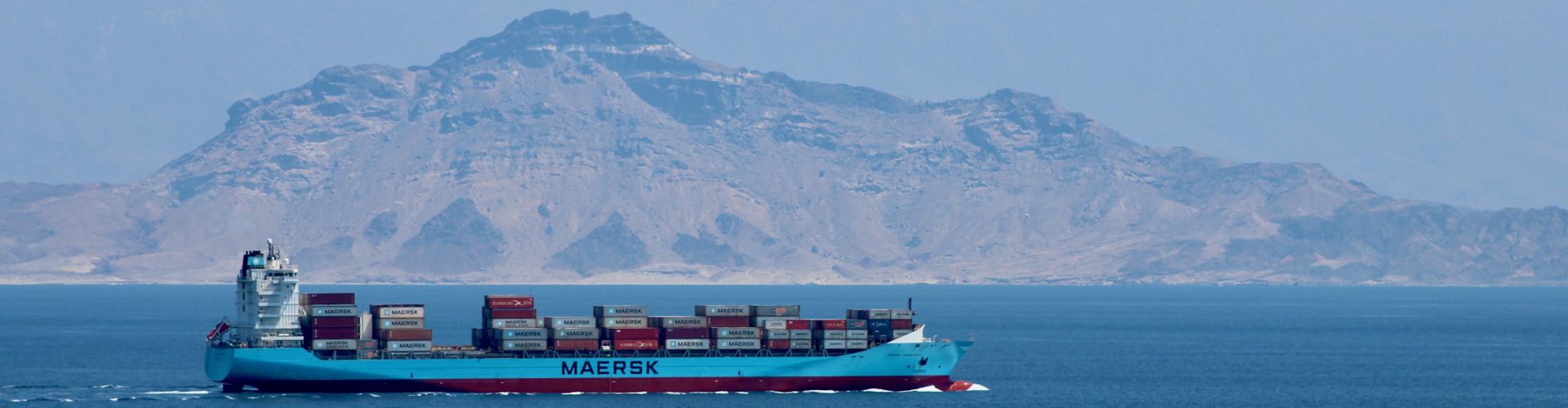
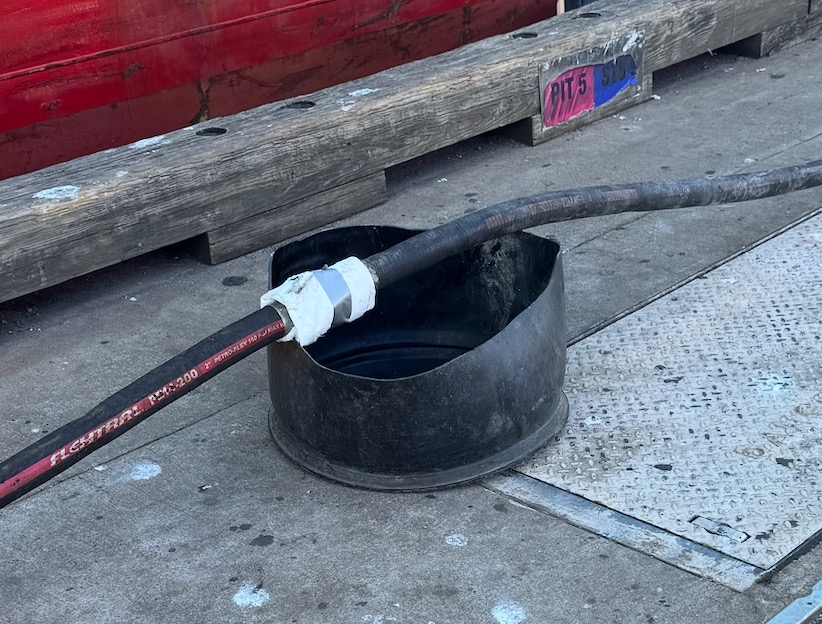
A vessel in port requested to offload oily waste and specified that the receiving truck must provide one continuous length of hose from the ship’s manifold to the pier. This requirement was put in place to minimize the risk of spills, as each connection point in a hose assembly introduces a potential failure point. However, when the truck arrived, it did not have a continuous hose of the required length. This presented the crew with a decision: proceed with the available equipment, accepting the increased risk of a spill due to a suspended fitting over the water, or insist on compliance with the original requirement, delaying the operation and potentially increasing crew fatigue.
The Tradeoff Between Safety and Efficiency
This scenario presents a direct conflict between two key operational considerations: safety and efficiency.
- Prioritizing Safety (Thoroughness): Insisting on the proper hose ensures compliance with best practices for pollution prevention. The risk of an oil spill is minimized by eliminating unnecessary connection points. However, this decision delays the offloading process while the correct equipment is sourced, which could lead to longer working hours and increased fatigue among the crew. Fatigue is a known performance-influencing factor that can contribute to human error, potentially leading to other safety incidents.
- Prioritizing Efficiency (Fatigue Mitigation): Proceeding with the available equipment allows for a more immediate resolution, reducing the time spent on the operation and limiting crew exposure to extended working hours. However, this introduces an increased risk of an oil spill if the suspended fitting over the water fails. A spill would have serious environmental and regulatory consequences, along with potential financial penalties and reputational damage to both the vessel operator and the waste disposal company.
Risk Analysis
Both options present risks that must be weighed carefully. The risk of an oil spill is immediate and environmentally severe, with strict regulatory oversight and potential financial consequences. On the other hand, fatigue-related incidents are more difficult to predict but are well-documented contributors to workplace accidents.
Best Practice Recommendation
A balanced approach is necessary to mitigate both risks effectively:
- Escalate the issue to shore-based management. This ensures that decision-making includes all relevant stakeholders and considers long-term operational impacts rather than forcing an immediate decision under pressure.
- Assess alternative mitigation measures. If the crew must use a segmented hose, additional safeguards should be implemented, such as secondary containment, absorbent booms, or additional securing measures for the connection point to minimize movement and potential failure.
- Enforce clear procedural compliance. If a continuous hose is a standard safety requirement, vendors must be held accountable for providing compliant equipment. Allowing deviations without consequence may lead to repeated non-compliance in the future.
- Fatigue management considerations. If sourcing the proper hose results in significant delays, crew scheduling should be adjusted to allow for adequate rest, mitigating the risk of fatigue-related errors during and after the operation.
While operational efficiency is important, safety must always take precedence when dealing with pollution prevention and regulatory compliance. However, this does not mean that fatigue risks should be ignored. A structured decision-making process that involves management, implements alternative safety measures where necessary, and considers crew work-rest cycles can help balance these competing priorities effectively.
nice! Analysis: Understanding the Historical Context of [Current Conflict] 2025 cute